
Animal symbolism
The owl as a power-animal image: attention, source and interpretation
Read one owl image through a named contemporary source, then build a clear visual metaphor without claiming a universal animal meaning.
In Owl in the Forest, an owl gives the scene a focal presence. Our question is small: how can that image invite closer attention? The instrumental does not teach a named ceremony; the interpretation below is a companion to its atmosphere.
A source changes how we read the animal
The June 2023 reading on the official Medicine Cards website associates Owl with deception and seeing what is hidden. We are reporting a contemporary spiritual interpretation in that particular reading, not confirming a supernatural ability. Medicine Cards, June 2023.
The project’s author page identifies Jamie Sams and David Carson as the book’s coauthors and Angela Wernecke as its illustrator. The online reading is the source actually consulted here; we are not presenting an unverified page from the book. About the Authors.
For our own scene, we translate the question into something ordinary: what detail have I not noticed yet? This is an SCW adaptation. It leaves the source’s predictive claims aside and does not imply that Sams, Carson or a named community endorsed our exercise.
The same idea in a visual sequence
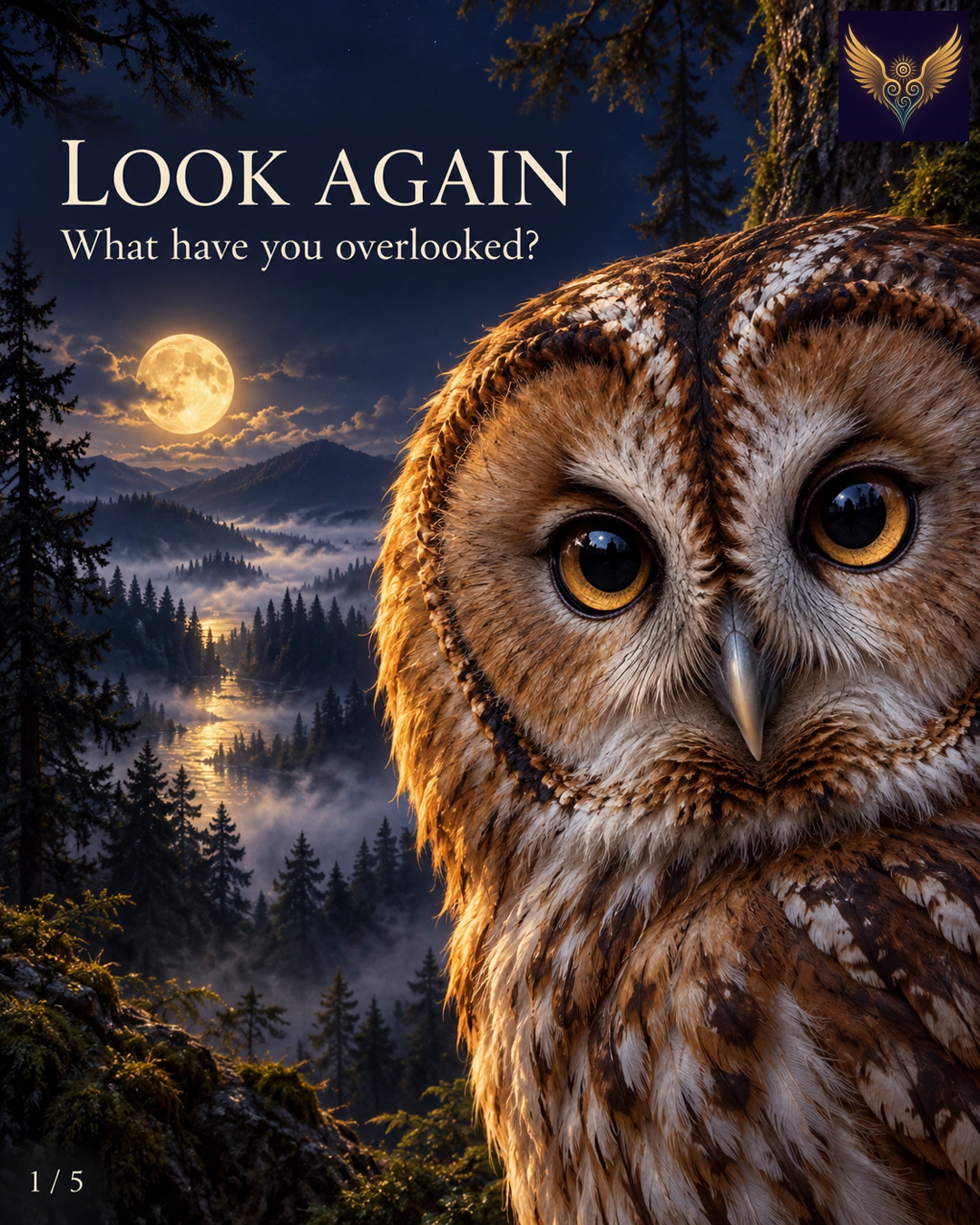
An SCW illustration from the approved “Look Again” carousel. The animal holds the viewer’s attention; the question invites a second look. This is our contemporary visual interpretation, not a reproduction of a Medicine Cards illustration.
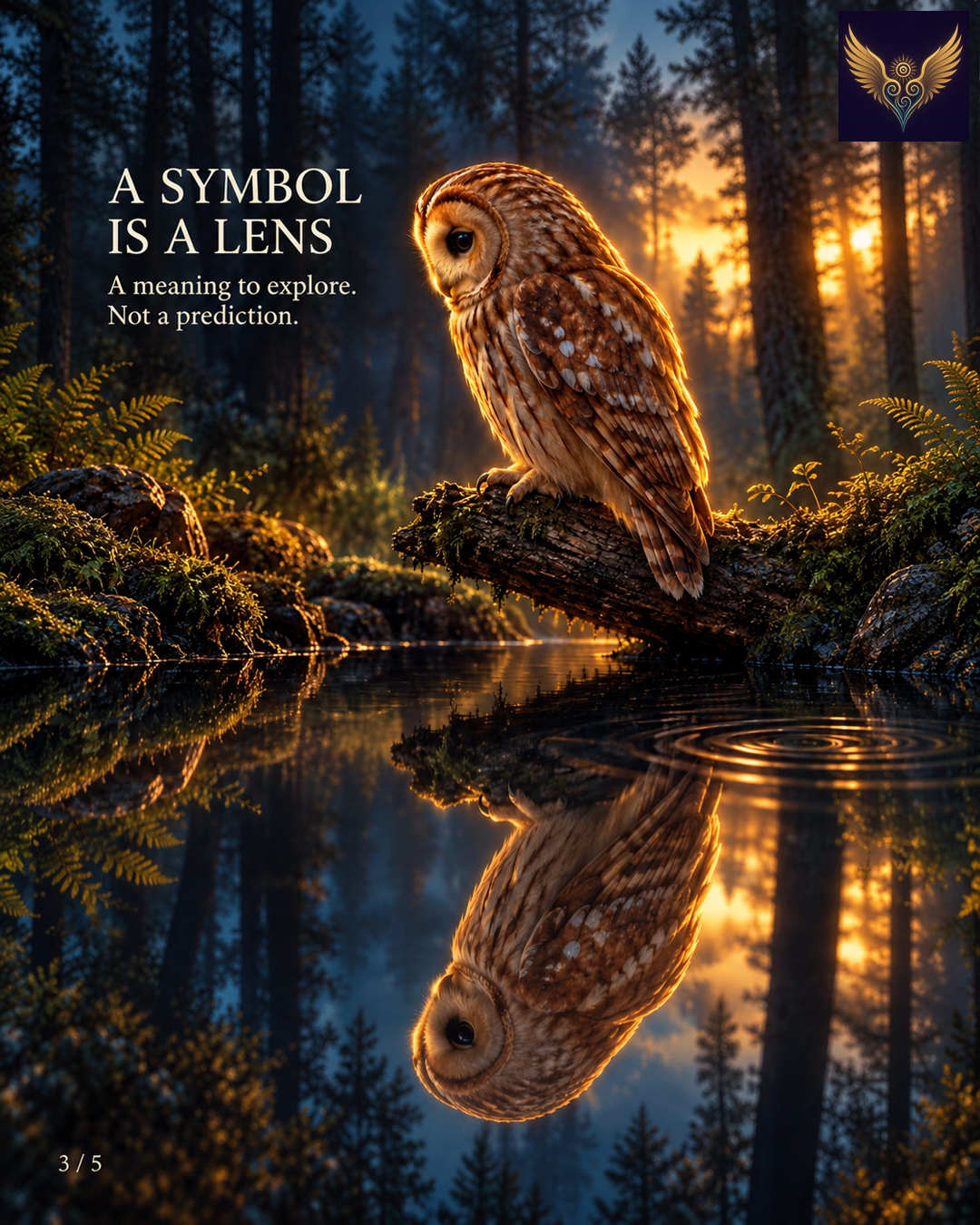
The reflection makes the distinction visible: an image offers a lens for interpretation, not a prediction. Read it alongside the source and context above. The practical question remains small: what detail deserves a second look?
Three layers in one illustration
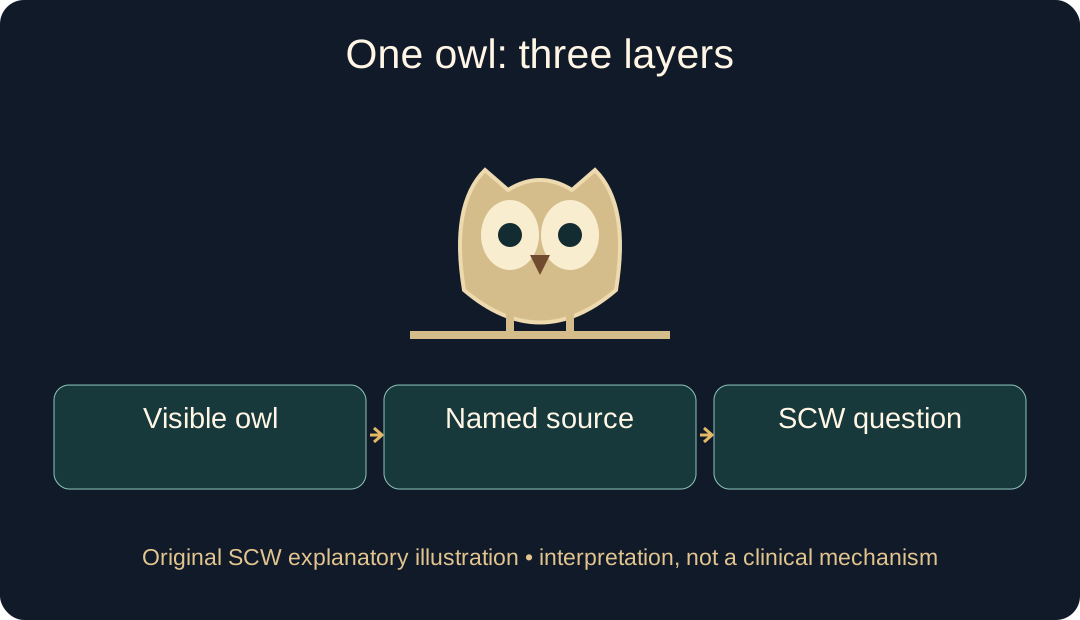
Visible form: point to the owl’s eyes and its place on the branch. Describe the illustrated scene without inferring a biological capability from the drawing.
Attributed reading: place the source beside the meaning, rather than printing “owl means wisdom” as an unexplained fact. A reader should know where an interpretation comes from.
Personal application: draw an arrow toward one action: listen to one sound before responding. The diagram is a reading aid, not a ritual diagram or a test for identifying someone’s spiritual guide.
The animal becomes part of the explanation. An owl pasted behind an unrelated paragraph would add atmosphere but would not teach the relationship.
“Power animal” needs a context
The Foundation for Shamanic Studies describes Core Shamanism as Michael Harner’s approach and distinguishes its training from community-specific ceremonies. This is the institution’s own account of its method, not proof that one system represents all traditions. FSS: Core Shamanism.
Here, “power-animal image” names the contemporary spiritual frame being discussed. It does not certify an encounter, identify a reader’s animal or replace the meanings of a living community. The channel can explore these ideas without turning every bird into the same spiritual category.
Try a source-aware interpretation
Look at one frame. Write three short lines:
- “I can see…” — name the owl, branch and scene.
- “This source proposes…” — identify the author, publication or tradition you actually consulted.
- “For this moment, I take it as…” — state your own reading and one possible action.
You may decide the image only gives you a sense of quiet. That response is enough. No omen, diagnosis or promised outcome is required.
For a culturally situated example of an animal in art, see Raven in Bill Reid’s Haida sculpture. Its story is not an owl meaning and should not be borrowed as one.
References and scope
- Medicine Cards, Monthly Animalscopes 2023, June entry: the specific contemporary reading discussed.
- Medicine Cards, About the Authors: authorship and illustration credits.
- Foundation for Shamanic Studies, Core Shamanism: the institution’s description of Harner’s method.
Consulted 15 October 2026. Illustration and attention exercise are original SCW work; no Medicine Cards artwork, spread or ceremony is reproduced.