
Everyday practice
A pause before interpreting: nature, attention and a gentler next step
A practical guide to noticing a sound, using nature imagery thoughtfully and returning to daily life, with research and its limits.
You reach for a quiet video, then notice another task forming: I should be calmer by the end. A pause can become one more thing to get right. This guide offers a smaller invitation: notice something that is here, give it a little space, and choose what comes next.
The 5-Minute Breathing Break and Owl in the Forest provide artistic starting points. This article develops a companion practice; it does not claim to transcribe either video or test its effects.
What kind of pause are we making?
There are three layers worth keeping distinct:
- Observation: a sound is audible; a chair supports your weight; your attention has moved.
- Interpretation: a forest scene may suggest shelter or spaciousness to you.
- Choice: you decide to put down the phone, listen briefly or write one sentence.
An interpretation can be meaningful without becoming a universal explanation. You can enjoy an owl in a scene without deciding that it carries a message about your future.
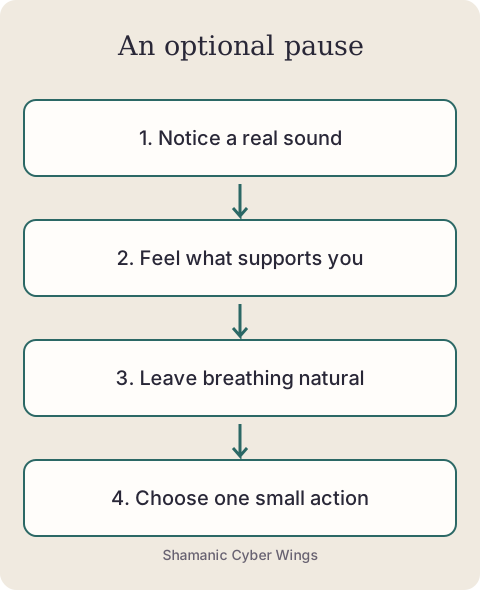
An optional practice designed for this article. Follow, adapt or stop at any step.
A short practice you can adapt
1. Set one thing down. Choose a moment when you can safely pause. A message can wait briefly if the situation allows. Nothing needs to be resolved during this interval.
2. Notice one sound you can actually hear. It might be a fan, rain, a bird or music from the video. Name the sound simply. If silence is uncomfortable, keep an ordinary room sound as your point of contact.
3. Feel what supports you. Notice the chair, floor or ground. Leave your eyes open if that is more comfortable. You do not need to imagine a different place or produce a special feeling.
4. Let breathing keep its own pace. You may notice an inhale and an exhale without making either deeper or slower. If attending to breathing is unpleasant, return to an external sound or stop the exercise.
5. Choose one possible next step. Complete the sentence, “For the next few minutes, I choose…” An action such as opening one document or postponing a reply is concrete enough. Feeling completely peaceful is not a requirement.
What research can tell us—and what remains open
A 2015 experiment compared a 90-minute nature walk with an urban walk in healthy participants. The nature group reported reduced rumination and showed a change in a measured brain region. This was a study of walking in real environments; it does not establish that watching a forest video for five minutes produces the same outcomes. Bratman and colleagues, PNAS.
Research on structured meditation or mindfulness programs also cannot automatically be transferred to a brief artistic clip. Programs differ in instruction, duration, participants and additional support. The NCCIH overview of effectiveness and safety describes those distinctions and notes that adverse experiences can occur.
Our proposal is therefore modest: use a scene or sound as a personal cue for attention. Whether this particular practice is useful to you remains a question to explore, rather than an effect established by those studies.
A worked example: before a difficult reply
Imagine a message that seems demanding. First, describe the observable event: “I received a request for an answer today.” Keep “they do not respect me” separate as an interpretation that might need more context.
After the pause, a possible response is: “I can review this after lunch and reply by three.” The purpose is to make a choice you can carry out. The other person may still disagree; the exercise does not control their response.
If the situation requires immediate action, take that action. A contemplative pause is optional, and a boundary can be direct.
Notice usefulness without turning it into a score
Afterward, ask: What did I notice? Did the exercise feel comfortable? Is my next action clearer? “This was not useful today” is a valid answer. Stop if discomfort increases; seek appropriate support for ongoing distress. This is an artistic reflection practice, not a treatment plan.
For the symbolic side of this approach, continue with One symbol, one question, one choice.
Explore the symbolic layer
For the owl image in the forest, read The owl as a power-animal image. For a clearly labeled comparison between stillness and action, read Yin-yang, pause and action. These develop different lenses; neither claims to explain a measured effect of this practice.
Sources and scope
- Bratman, G. N., and colleagues (2015). Nature experience reduces rumination and subgenual prefrontal cortex activation. PNAS, 112(28), 8567–8572. Paper and DOI; PubMed record. Primary research; real-world nature exposure.
- National Center for Complementary and Integrative Health. Meditation and Mindfulness: Effectiveness and Safety. Specialist public research overview; not an evaluation of SCW videos.
Sources checked on 15 October 2026. The step sequence, diagram and worked example are original SCW editorial proposals. Their inclusion does not establish clinical efficacy.